The Three-Stop Walk: Why a Small Route Holds Attention
Plan a three-stop city walk around places that show different sides of one neighborhood, with a clear route and practical backups if a stop is closed.
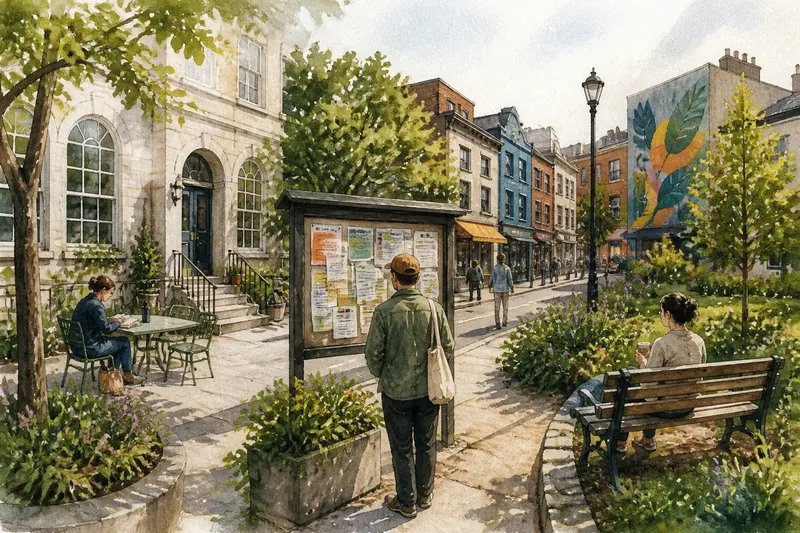
The common mistake in planning a three-stop city walk is choosing three destinations that all ask you to do the same thing. The result can feel like repeating one visit, even when the addresses differ. Give each stop a distinct purpose, and the route becomes a way to read a neighborhood rather than a short list of errands.
Three distinct roles
A stop is a place chosen for a particular reason to pause. It might be a library courtyard, an independent storefront, a public market, a mural or a pocket park. The important distinction is what each place lets you notice.
Assign each stop a role before choosing an address:
- Observe: Look at a street scene, building detail or public artwork. If the place offers a clear subject to notice, keep it; if it feels visually similar to another stop, choose a different kind of place.
- Learn: Read a community noticeboard, browse a local history display or look for signs of how a block is used. If information is publicly available and easy to approach, include it; if access is restricted or unclear, choose an open public feature instead.
- Rest: Finish at a park, courtyard or other public place where sitting is welcome. If the setting feels comfortable and accessible to you, use it as the ending; if not, choose another nearby public space.
The roles need not follow this exact order. They simply help you avoid selecting three places that offer the same experience. A walk can feel varied without covering a large area.
Choose a route pattern
One useful pattern is a place-to-place arc: begin somewhere recognizable, continue to a more specific local feature, and finish somewhere calm. A transit plaza, a block of independent shops and a small park could form that sequence. It can suit a first visit because each point gives the next leg a purpose.
A second option is a neighborhood thread. Choose a subject such as street art, local history or everyday civic life, then let each stop reveal a different aspect of it. For example, a mural, a public noticeboard and a makers’ storefront all connect to neighborhood expression, but invite different kinds of attention.
A third pattern keeps the middle stop flexible. Pick an opening point and an ending point, then search along the route for a specific feature, such as a covered passage or a public place with seating. A clear prompt gives you room to choose without turning the walk into aimless wandering.
Check the connections
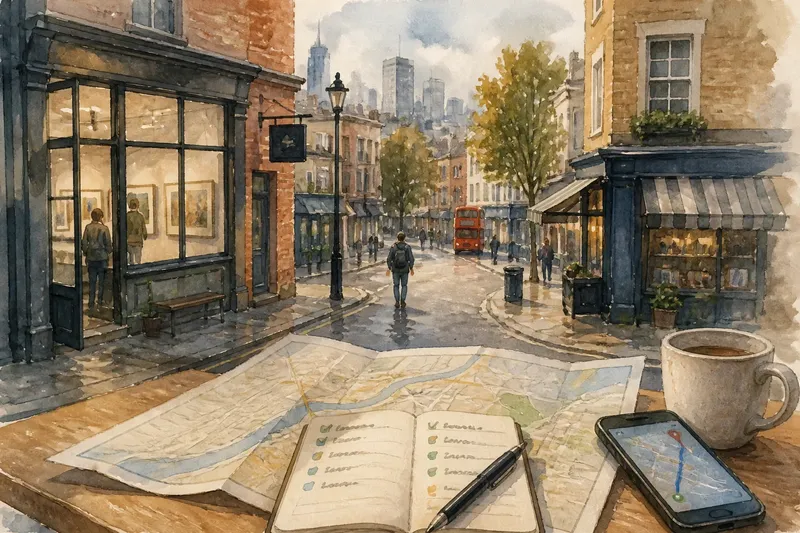
Look at a street map before setting out, but do more than draw a line between the addresses. Check whether the route includes awkward crossings, long stretches beside fast traffic, dead ends or paths that may not be open to the public. A short route can still feel disjointed if its streets do not connect naturally.
Use this route check to make a decision at each point:
- If the map shows a safe, direct crossing, keep the street connection; if it requires an uncomfortable crossing, choose a parallel street or a different stop.
- If a path appears to pass through private property, verify public access; if access is uncertain, route around it using public streets.
- If a stop depends on opening hours, check its current schedule; if it may be closed, identify a nearby public alternative with a similar role.
- If the route ends far from transit or another convenient way home, move the final stop nearer to that connection; if you prefer to walk back, make the return route clear too.
- If all three stops are shops or venues, replace one with a public feature; if the route already mixes commerce, observation and open space, keep the variety.
- If weather could make an exposed stop uncomfortable, choose a covered or indoor public option where appropriate; if the weather is mild, keep the outdoor stop.
It is not worth plotting every bench, doorway display or possible detour in advance. That effort can turn a low-key outing into a scavenger hunt. Check the connections and likely closures; let minor discoveries remain discoveries.
Match the walk to your mood
For a straightforward outing, use a clear arc and choose places that are easy to recognize. If you want to understand the character of a district, pick a theme and vary how each stop engages you. If you know the area already, keep one stop open but give it a concrete prompt.
Imagine you want to explore a familiar neighborhood through its everyday public life. You start with a library courtyard, choose a community noticeboard as the second stop, and end in a pocket park. Before leaving, you check the map and see that the direct route crosses a busy road at an inconvenient point, so you use a parallel street with a marked crossing. You also check whether the library courtyard is open; if it is not, the public sidewalk beside the noticeboard offers a place to begin observing the block. The resulting plan keeps its three distinct roles while adapting to access and street conditions.
Questions about city walks?
What counts as a stop?
A stop is any place you choose as a reason to pause, not only a venue with opening hours. A public courtyard, storefront block or riverside path can count when you have a clear reason to notice it.
How far apart should stops be?
Choose stops that connect comfortably on foot rather than relying on a fixed distance. Check crossings, traffic and access on the map, then change the route if a leg seems awkward.
What if a place is closed?
Keep the role and substitute a nearby place that offers a similar kind of attention. If a bookshop is closed, for instance, an open storefront block may still let you observe local commerce.
Should I add a fourth destination?
Add one only if it offers a distinct experience and fits the route without making the walk cumbersome. If it repeats a role already covered, treat it as an optional pause rather than a new destination.
Finish near a useful point
A good final stop gives the walk a natural ending. A public park near transit, a quiet courtyard or a welcoming civic space can provide a place to sit before heading home. Choose a finish that suits your route and your comfort, rather than adding another venue simply to make the outing feel complete.
For a three-stop city walk, choose three different reasons to pay attention, check how the streets connect them, and keep a practical substitute for any stop that depends on access or opening hours. That planning approach makes the route easier to follow while keeping the neighborhood itself at the center.