Square, Arcade or Market Hall: Picking a Place to Pause
Compare a square, arcade, or market hall by seating, shelter, and movement so you can choose a public place that suits your break and avoid awkward stops.
The common mistake when choosing a place to pause is assuming a square, arcade, or market hall will work the same way. That can leave you searching for a seat in a busy passage or discovering that a hall’s tables are meant for customers. A quick look at the layout helps you choose a spot that fits your break.
For a low-key city outing, start with what you need: an open view, cover from the weather, somewhere to sit without buying anything, or activity to watch. The names are useful clues, but the actual seating and movement matter more. A square is open, an arcade is a covered passage, and a market hall centers on stalls or food counters.
Square seating
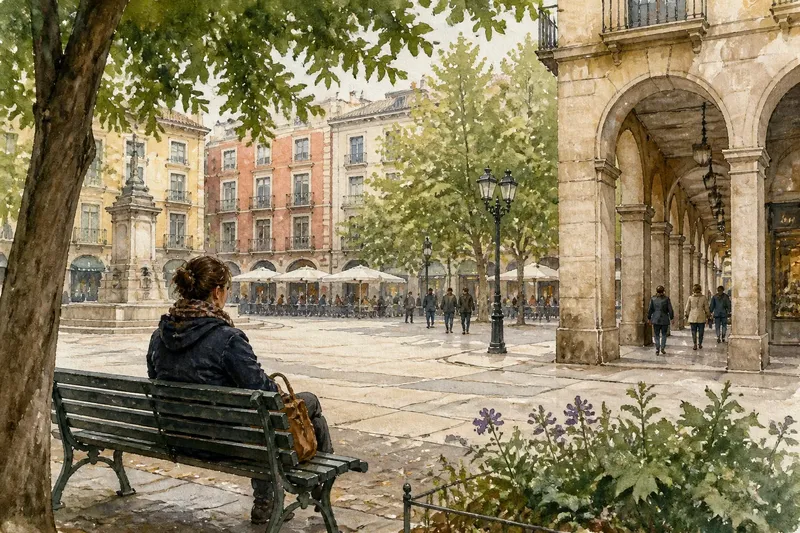
A square is an open public space, often framed by streets or buildings. Its paths and edges are usually visible from within, so you can look around before choosing where to stop.
Some squares have benches, trees, low walls, or steps that serve as informal seating. Others mainly channel people between streets. A broad paved center does not tell you whether there is a comfortable place to sit, so check the perimeter and note whether seats face a view or a busy route.
If you want to watch people pass, look for a seat just outside the main flow. For a quieter pause, a planted edge may feel less exposed than the center. Squares are open to the elements, though, and trees or building overhangs may offer only partial cover.
Arcade movement
An arcade is a covered passage, often lined with shops and supported by columns or arches. People generally move along it from one end to another, so a seat or recess at the edge is more useful than stopping in the walking line.
Look for a bench, ledge, or wider recess where you can pause without blocking a doorway. If the passage is narrow, step aside before checking a map or adjusting a bag. The roof can shelter you from rain or harsh sun, but the steady foot traffic and shop activity may make the space feel busy.
Shopfronts create natural slow points where people stop to look or enter. If you want to observe without joining a cluster, choose a quieter stretch rather than a prominent doorway. An arcade suits a brief covered pause when a suitable place to sit is actually visible.
Market hall seating
A market hall is an enclosed or partly enclosed venue organized around stalls, counters, or food vendors. People browse, queue, meet, and carry purchases through its shared aisles. That stop-and-start movement can be absorbing, but it may not provide a quiet break.
Some halls have communal tables or benches; others rely on nearby cafés or adjoining public areas for seating. Check posted guidance or ask staff whether a table is open to visitors who are not buying food. Keep aisles and queue areas clear, and avoid treating customer seating as public seating without checking.
A hall can suit a snack break or a look at local trade. Food aromas, queues, and overlapping conversation may be tiring if you want quiet. If you need a calm place to sit, first check whether there is a less central seat or a separate public area.
Choosing a place
Start with your main need, then check the actual layout. Use these observations to decide what to do next:
- Seat availability: Check for a bench or public seating. If one is open, choose a spot outside the main route; if not, continue to another place rather than settling in a doorway.
- Weather cover: Look for a roof or substantial shelter. If the square is exposed and you need cover, try an arcade or indoor hall; if neither has a place to sit, keep moving under cover instead of assuming the roof means seating.
- Foot traffic: Notice where people enter, cross, or queue. If a seat is beside a bottleneck, choose a quieter edge; if every available seat is in the flow, look elsewhere.
- Noise and activity: Listen for queues, shop traffic, and overlapping conversation. If you want quiet and the hall is busy, try a planted square edge; if the square is also crowded, continue to a less active spot.
- Seating rules: Check signs or ask staff whether tables are for customers. If use is limited to customers, choose public seating in a square or another clearly designated area; if the rules allow general use, sit without blocking service or passage.
- View and exposure: Check what a seat faces and whether it is in direct sun or exposed to wind. If the view suits you but the spot feels exposed, try a sheltered edge; if no seat fits both needs, prioritize the more important one for this break.
Say you are walking alone on a cloudy afternoon and want to sit without buying anything. Your starting options are a square with benches beneath trees, an arcade with a narrow passage and no visible seats, and a market hall with crowded communal tables. You check the square’s benches and see an open seat away from the main crossing, so you choose it for the view and partial cover. If the clouds bring rain, the arcade offers a route under shelter, but its lack of seats means you may need to keep walking; the market hall is an option only if its seating rules allow a non-customer to sit and a table becomes available.
Questions about places?
Which place suits people-watching?
A square gives you an open view, while an arcade frames people moving along a passage. A market hall brings activity closer, especially around stalls and queues.
Where can I sit without buying anything?
A square is a good place to check for seating intended for general use. In an arcade or market hall, look for signs or ask staff before using tables that may be reserved for customers.
Which place offers shelter in rain?
An arcade or indoor market hall may provide more cover than an exposed square. Check whether the sheltered place also has seating, since a covered route may still be intended for passing through.
How can I avoid blocking people?
Choose a seat away from entrances, queues, and the main walking route. Keep bags close, and move to a wider edge if no clear place to pause is visible.
Read the edges
The useful clues are often along the edges: a bench, a recess, tree cover, or a stretch of shopfront away from a busy entrance. Check whether a seat is open to you, then notice the movement and noise from that spot. That is a better basis for choosing a square, arcade, or market hall than the venue’s name alone.
It is not worth searching for one perfect spot with the best view, complete shelter, and no noise. A modest seat away from the main flow may be enough. If you are choosing a place to pause, look for the usable seat first and let the layout guide the rest of the decision.