A Rainy Market Morning, Planned Around One Good Bite
Plan a rainy market morning around one good bite: choose a stall, keep the route compact, and leave room to linger without getting soaked.
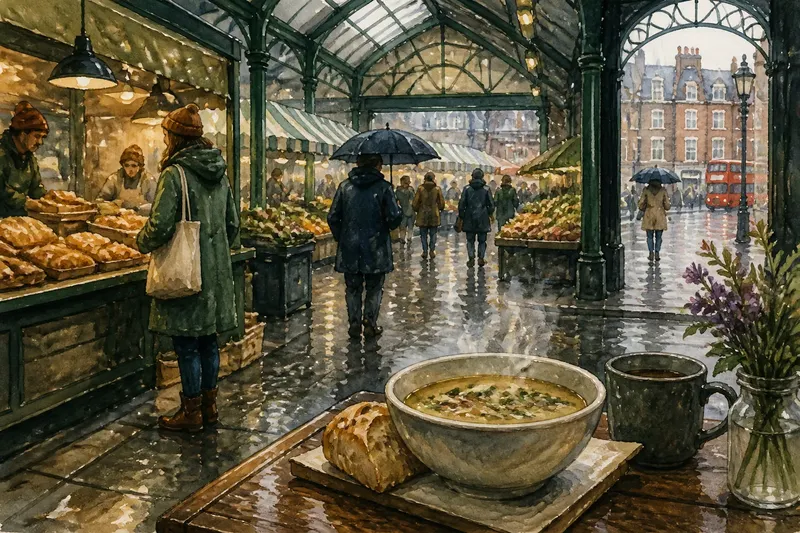
The common mistake on a rainy market morning is treating every stall as a possible meal. That turns a neighborhood outing into a damp circuit of queues and indecision. Plan a rainy market morning around one food stop, then let the covered streets, public spaces, and market’s own rhythm shape a compact city walk.
Choose one food stop
Decide what kind of pause you want before looking at menus. A hot bowl of soup suits a cold, wet morning; a pastry and coffee are easier to carry if you want to keep moving. Choose a stall that fits the outing, rather than building a list of dishes to track down.
Check the market’s vendor listings or social posts before leaving. Keep one nearby backup in mind in case your first choice is closed or the line blocks the sheltered seating. The backup should offer a similar kind of pause, not send you across the neighborhood on a food hunt.
Look for practical details on the menu: whether food is served hot, whether seating is nearby, and whether the portion suits a morning bite. If the menu is unclear, settle on a broad preference—warm, baked, or easy to carry—and choose in person.
Keep the walk compact
Rain makes small detours less appealing. Choose a market entrance near your food stop, then keep the rest of the walk inside the hall or along a covered stretch where possible. A public arcade, sheltered lane, or nearby library can offer a natural pause without turning the outing into a route-planning exercise.
Check the market map for entrances and indoor areas, along with posted rules about umbrellas and seating. An open-air market can still work if stalls are close together and a transit stop is nearby. Use the map to understand the layout, not to schedule every turn.
A compact umbrella or rain jacket and a bag that leaves one hand free are usually enough. A tote can hold a small purchase, but it may be awkward alongside a drink. It is not worth packing for every possible change in weather or planning each block in detail; extra gear and a rigid itinerary can make a simple neighborhood outing harder.
Read the market’s rhythm
Once inside, pause before joining a line. Notice where people stop, which aisles stay clear, and whether the food area has seats or ledges. This quick look helps you avoid carrying a hot drink through a busy passage while searching for somewhere to stand.
Say you reach a covered neighborhood market with a bakery by the entrance and a soup stall farther inside. You want a warm breakfast, but the soup line stretches into the main aisle. You choose a savory hand pie from the bakery, eat at the covered seating area, then browse nearby produce stalls without crossing the crowded hall again. The tradeoff is a less warming meal in exchange for a calmer route and an easier place to sit.
Give an unplanned pause a natural boundary: one sheltered table or a nearby aisle of browsing. You might notice a flower vendor arranging buckets or the room quieting between rushes. You do not need to add another stop to make the outing feel complete.
Which market choices matter?
Should you arrive early?
Check the market’s posted hours and the stall’s schedule before choosing a time. If a vendor opens later, arrive then; if the market is open and you prefer a quieter start, go earlier and keep a nearby backup in mind.
What if the stall is closed?
Use the nearby backup you chose before leaving. If that option is also unavailable, pick a simple bite on site and continue the short walk rather than searching across town.
Can you eat while walking?
Dry pastries are easier to carry than hot bowls or saucy food, and crowded aisles can make either awkward. If you want to keep moving, choose a food that is easy to hold and follow the market’s rules about eating in shared spaces.
When should you leave?
Leave after you have eaten comfortably and browsed a nearby stall or sheltered stretch. If the rain strengthens or the hall becomes crowded, head toward the nearest covered exit or transit stop instead of extending the walk.
- Check the vendor’s current schedule; if your chosen stall is open, keep it as the anchor, and if it is closed, use the nearby backup.
- Check the menu for hot food and nearby seating; if both fit your planned pause, stay with that stall, and if not, choose a warm or easy-to-carry option elsewhere in the market.
- Check whether the line reaches into a main aisle; if it blocks the route, choose the backup or browse another nearby stall while waiting, and if it does not, join the line.
- Check for a sheltered place to eat; if one is available, sit there, and if not, choose food that is comfortable to carry or shorten the visit.
- Check whether your route stays under cover; if it does, continue to the next nearby public place, and if it does not, return through the market hall or head to a covered transit stop.
- Check the market’s rules on umbrellas and eating; if your plan follows them, proceed, and if it does not, stow the umbrella or eat in the permitted area.
A rainy market morning works best when one food stop anchors a small city walk rather than dictating the whole day. Check the stall, choose a nearby covered route, and leave enough room to notice the independent shops and everyday neighborhood rhythms along the way.